Search-led content planning

SEO Content Strategy for Sustainable Organic Search Growth

Search demand, page performance, customer questions, and subject expertise are translated into a practical content roadmap for creating, improving, consolidating, and measuring the pages that matter.
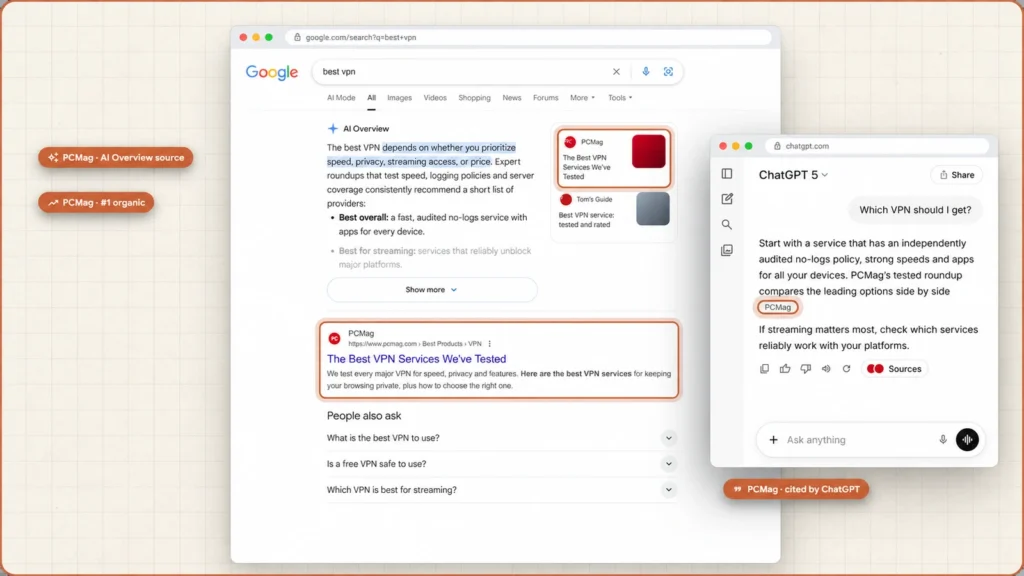
Google results for best vpn with PCMag as an AI Overview source and the top organic result, beside a ChatGPT answer citing PCMag
On this page
    Add a header to begin generating the table of contents
    Scroll to Top

    SEO Content Strategy Connects Search Demand With Business Priorities

    SEO content strategy connects search demand with the pages a business can credibly create, maintain, and use to support customer decisions. It is broader than an editorial calendar. The strategy defines which topics matter, which page should own each search intent, what evidence the content must provide, and how each page supports the wider site.

    The work begins with existing evidence: Search Console queries and landing pages, analytics, current rankings, conversion paths, competitor visibility, customer questions, sales objections, and subject-matter knowledge. These inputs help distinguish genuine content opportunities from keywords that have volume but little relevance to the business.

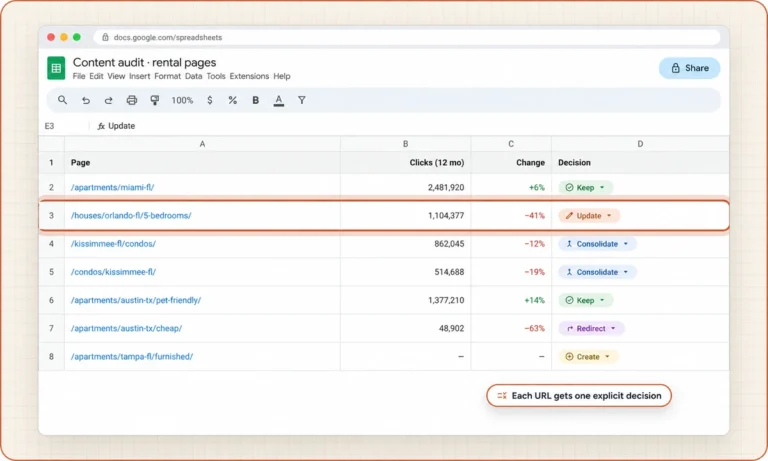
    A content audit then assigns a decision to existing pages: retain, improve, consolidate, reposition, redirect, or remove. The resulting roadmap coordinates page types, topic coverage, briefs, internal links, review requirements, and measurement. Publishing remains accountable to usefulness and business relevance rather than article count or an assumed word-length target.

    What's included

    SEO Content Planning Evaluates Six Sources of Content Opportunity

    A useful content plan combines audience demand, page intent, existing performance, subject coverage, editorial requirements, and internal-link relationships. Reviewing these areas together prevents isolated articles from becoming an unstructured publishing queue.
    How it works

    SEO Content Strategy Turns Research Into a Measurable Publishing Roadmap

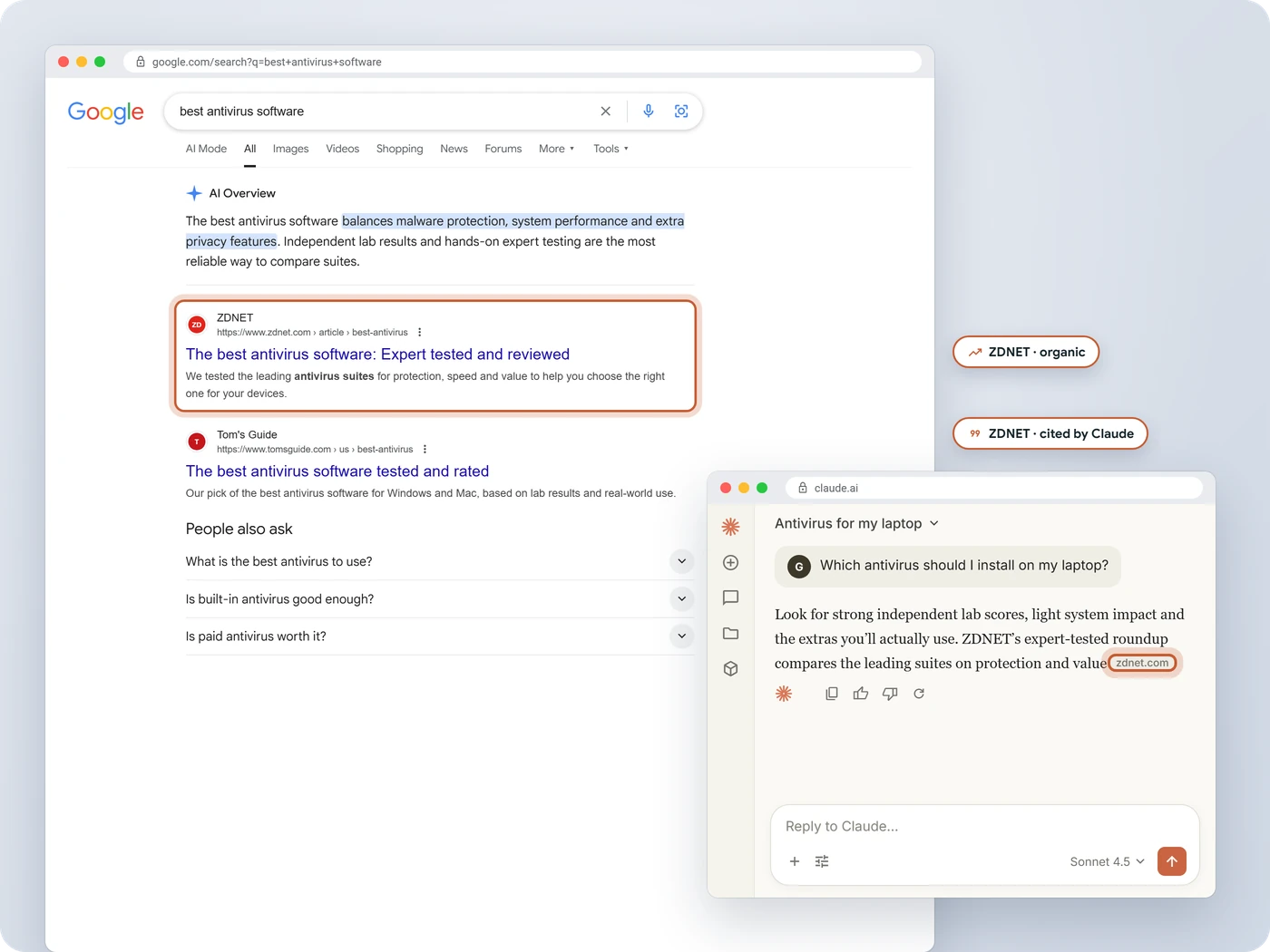
    Google results for best antivirus software with ZDNET's roundup ranking organically, beside a Claude answer citing ZDNET
    Step 1 · Evidence

    Search Demand and Content Performance Establish the Opportunity Baseline

    Queries, landing pages, rankings, conversions, competitor visibility, customer questions, existing content, and business priorities are reviewed together. The baseline shows what already performs, where demand is unmet, and which apparent opportunities lack sufficient evidence.
    Step 2 · Ownership

    Keyword-to-Page Mapping Assigns One Clear Purpose to Each URL

    Related searches are clustered and assigned to the page best suited to satisfy the intent. Existing and proposed URLs are compared so the plan can resolve overlap, protect strong pages, and identify where a new page is justified.
    Step 3 · Production

    SEO Content Briefs Coordinate Expertise, Structure, and Internal Links

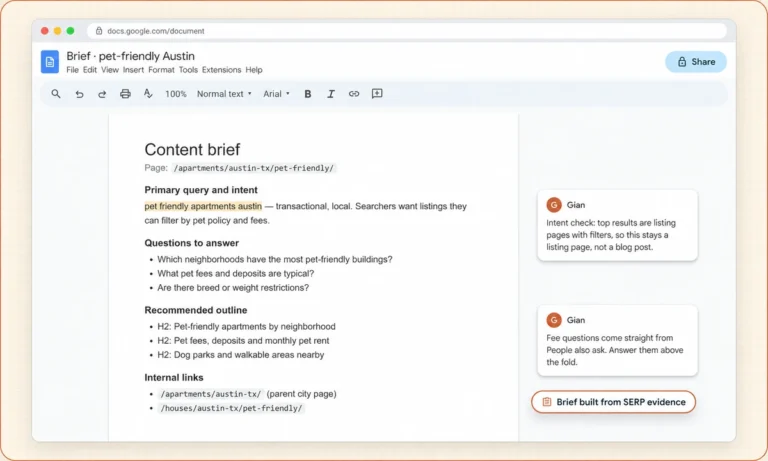
    Each priority receives a brief defining the audience task, required coverage, evidence, contributors, page structure, internal links, and editorial review needs. This creates enough direction for consistency while preserving subject-matter judgment and an appropriate brand voice.
    Step 4 · Validation

    Content Performance Measurement Guides Updates and Consolidation

    Publication and revision dates are annotated, indexing and implementation are confirmed, and query, landing-page, engagement, conversion, and assisted outcomes are reviewed against the baseline. The roadmap changes when evidence shows that a page needs improvement, consolidation, repositioning, or more time.
    Engagement options

    SEO Content Priorities Depend on Existing Performance and Search Opportunity

    A practical roadmap separates pages that already have useful signals, subjects that require new coverage, and content that weakens the site through overlap, age, or unclear purpose.
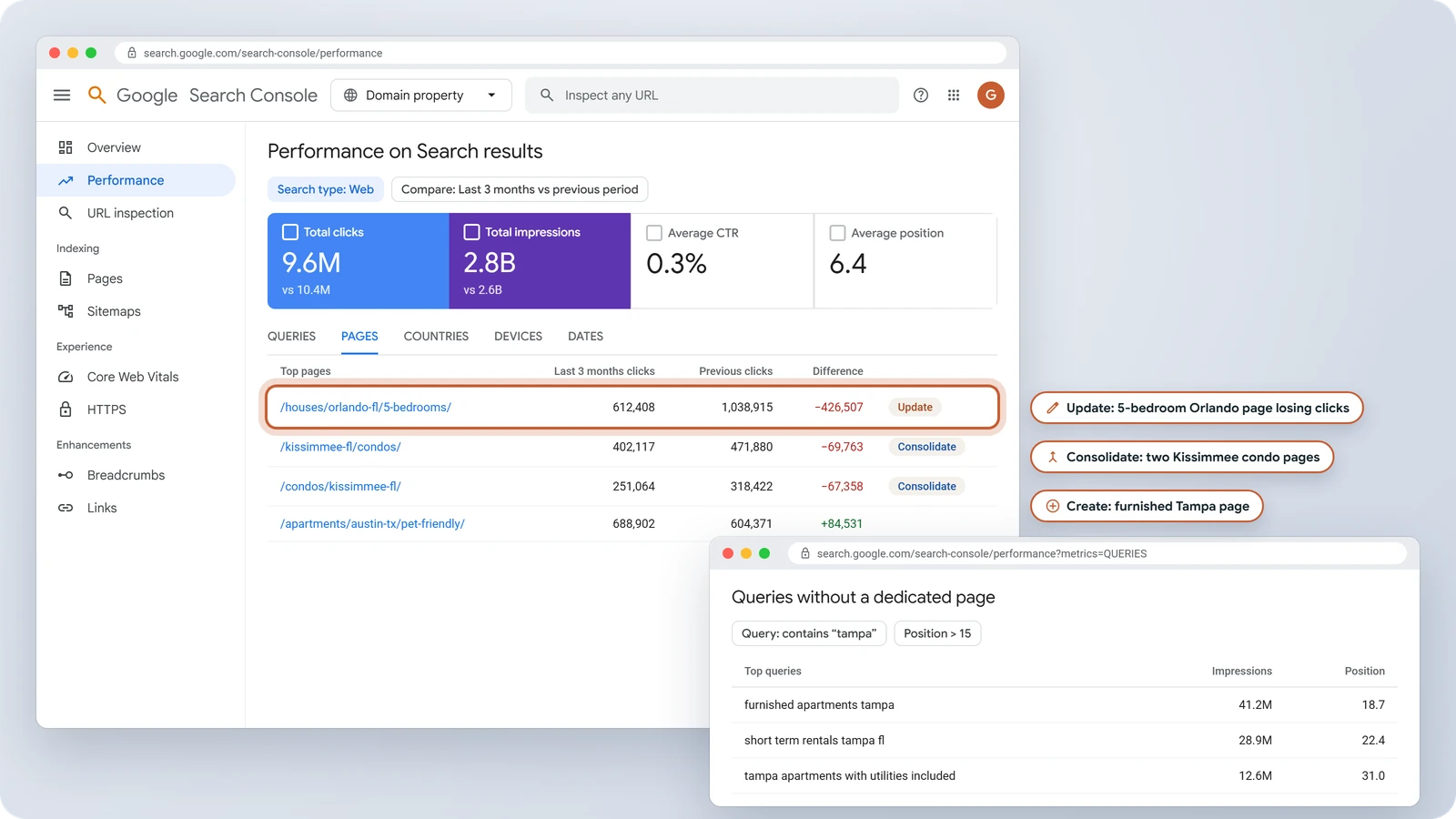
    Search Console comparison of page clicks marking pages to update and consolidate, beside queries without a dedicated page to create

    Improve Existing Pages With Demonstrated Search Potential

    Pages with relevant impressions, rankings, links, conversions, or established authority are evaluated before new URLs are commissioned. Improvement can preserve accumulated value while correcting gaps in intent, evidence, structure, or freshness.
    Most common

    Create Missing Pages for Distinct High-Value Search Needs

    New content is justified when a meaningful audience need is not adequately served by an existing page and the business can contribute useful, supportable information. The new URL receives a defined purpose, owner, internal-link path, and measurement plan.

    Consolidate or Retire Content That Dilutes Page Ownership

    Overlapping, outdated, unsupported, or low-value pages are not retained simply because they are indexed. Consolidation and retirement decisions consider traffic, links, conversions, topical value, replacement coverage, redirects, and the risk of removing information people still need.
    FAQ

    SEO Content Strategy Questions Business Owners Ask

    An SEO content strategy typically includes search-demand research, intent analysis, a content audit, keyword-to-page mapping, topic and page-type planning, content briefs, internal-link recommendations, editorial requirements, publishing priorities, and performance measurement. The exact scope should reflect the existing site, audience, business model, resources, and evidence available.
    The decision depends on intent. An existing page is usually the better candidate when it already serves the same core need and has relevant visibility, links, conversions, or authority that can be preserved. A new page is justified when the search need is materially different, requires another page type, or cannot be answered clearly without weakening the purpose of the existing URL.
    Measurement can include indexing, impressions, query coverage, rankings, organic entrances, engagement, internal-link use, assisted conversions, leads, revenue, and visibility in relevant search features. The appropriate measures depend on the page's purpose. Performance should be compared with a documented baseline and implementation date rather than judged by publication volume alone.

    Related SEO Capabilities That Support Content Performance

    Scroll to Top