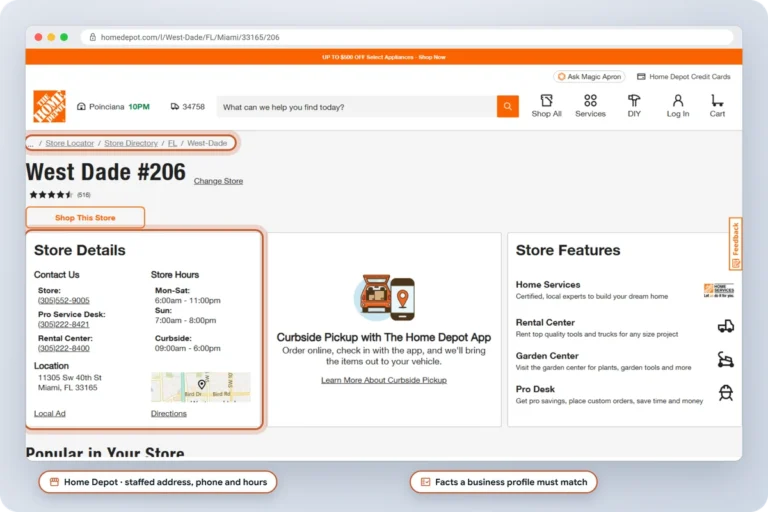
Local visibility built on accurate business data

Local SEO for Storefront, Service-Area, and Multi-Location Businesses

Local visibility depends on more than a business profile. Search engines compare profile eligibility, website content, location evidence, reviews, citations, structured data, and user context before deciding which businesses to show. Local SEO brings those signals into alignment so customers can find accurate information wherever they search.
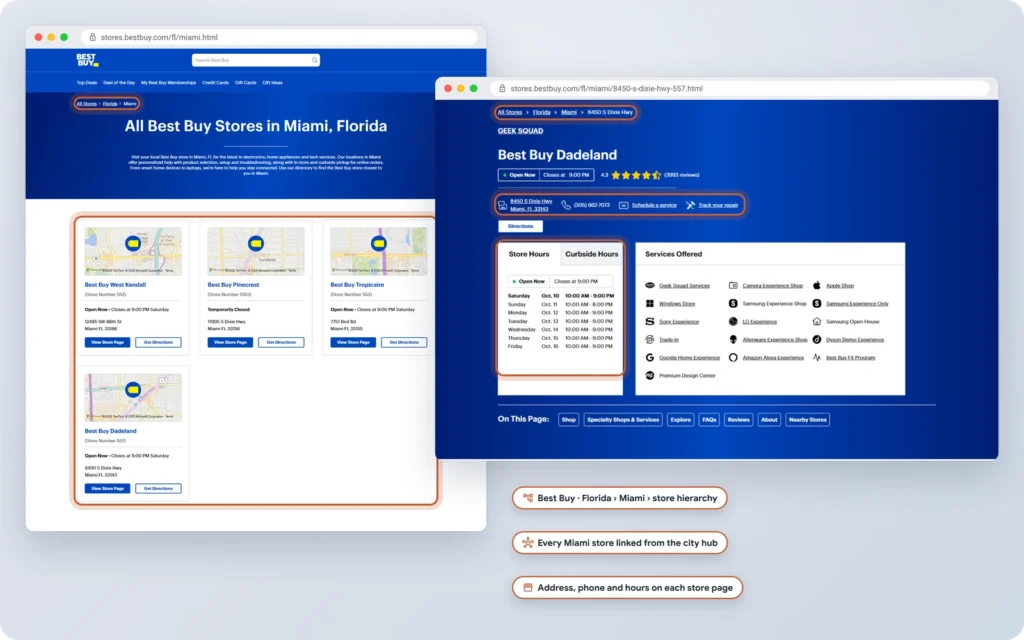
Best Buy page listing all its Miami, Florida stores beside the Best Buy Dadeland store page with its Florida, Miami breadcrumb, address, phone and store hours
On this page
    Add a header to begin generating the table of contents
    Scroll to Top

    SEO-Optimized Location Pages and Reviews Strengthen Organic Local Visibility

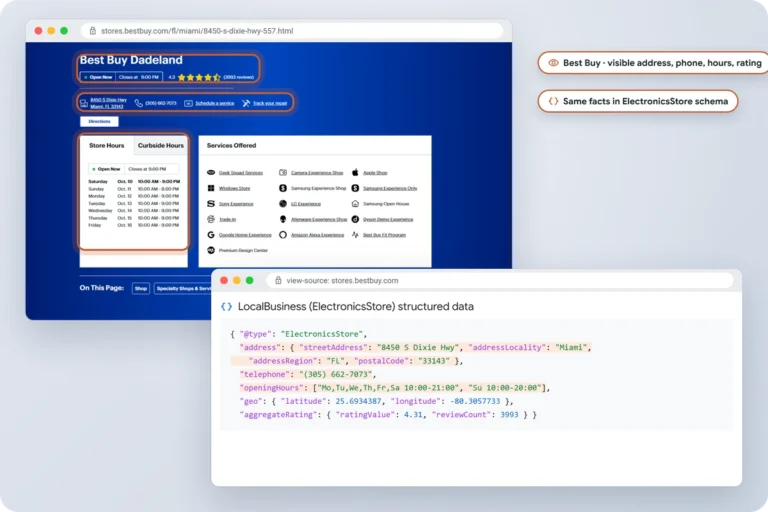
    SEO-optimized location pages give each eligible storefront, office, or service market a clear organic-search destination. A useful page explains which services are available, where the business operates, how customers can visit or schedule service, and what evidence makes the location relevant to the search. Distinct titles, headings, copy, internal links, contact details, structured data, and indexable page elements help search engines understand the relationship between the business, the location, and the services offered there.

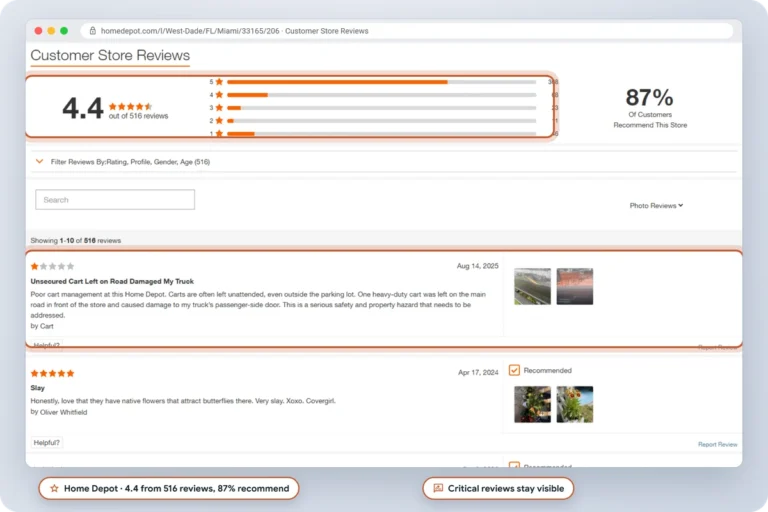
    Customer reviews add a different kind of evidence. They help prospective customers evaluate real experiences and can reinforce the language people use when describing service quality, staff knowledge, responsiveness, products, and locations. Reviews on business profiles may influence local prominence and engagement, while original review or testimonial content displayed responsibly on the website can improve page usefulness and conversion confidence. Reviews should support the page rather than replace accurate location information or substantive content.

    The strongest organic result comes from alignment. The location page, business profile, review activity, citations, and structured data should describe the same real operation without manufacturing offices or duplicating city pages. Search platforms apply different systems and may weigh relevance, distance, prominence, content quality, and user context differently. Better location evidence and trustworthy reviews can strengthen visibility and engagement, but neither guarantees a specific organic position or map ranking.

    What's included

    Local SEO Visibility Depends on Connected Search Signals

    Strong local visibility depends on profiles, website pages, business data, reviews, and structured information working as one system. Each area answers a different eligibility, relevance, or trust question.
    How it works

    Local Visibility Depends on Eligibility Accuracy Relevance and Results

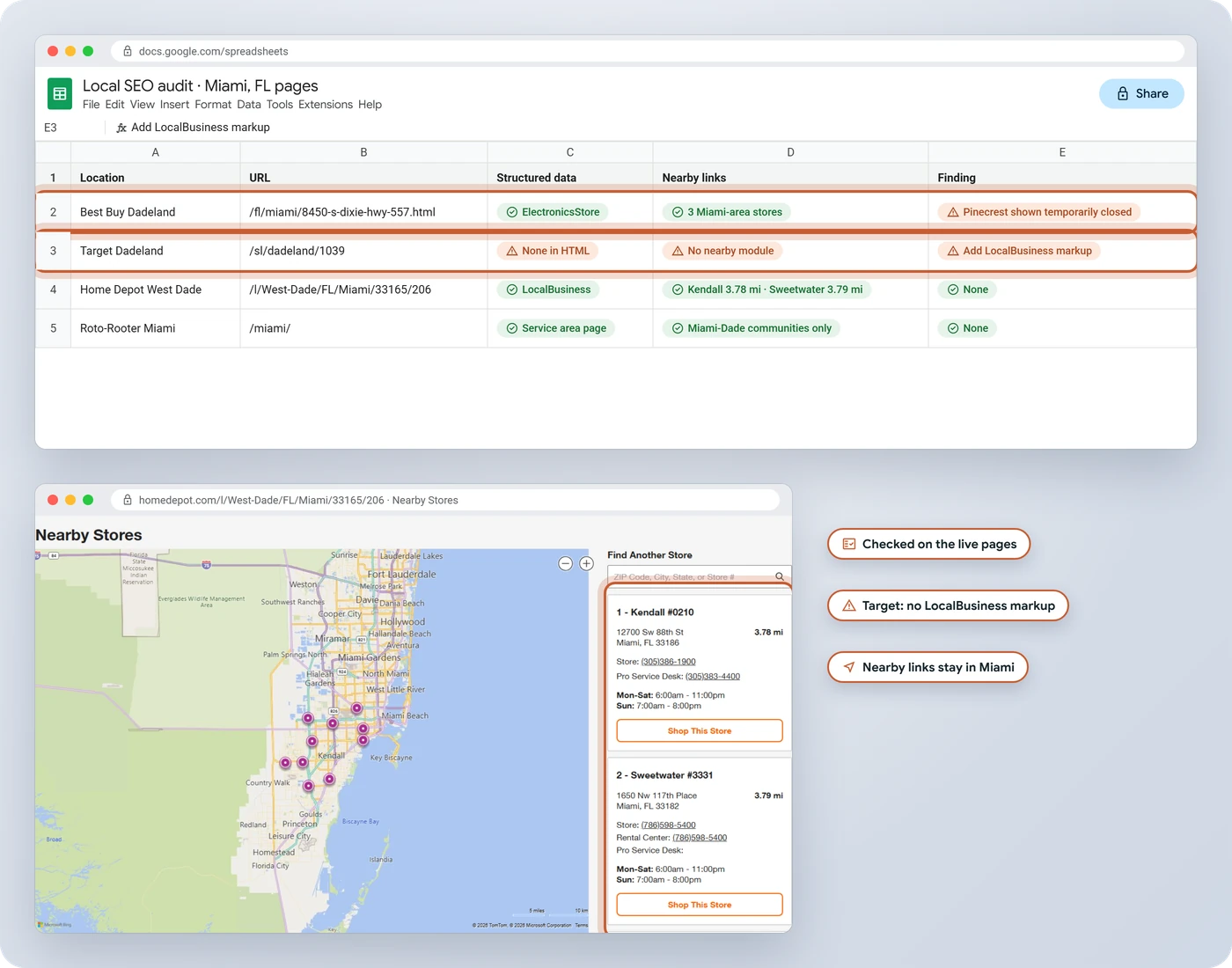
    Local SEO audit of Best Buy, Target, Home Depot and Roto-Rooter Miami pages beside Home Depot's nearby Miami stores ranked by distance
    Step 1 · Verify

    Profile Eligibility and Administrative Access

    Profile eligibility depends on the business model, customer contact, ownership, verification status, and storefront or service-area rules. Administrative access to the profile, website, analytics, and call tracking should also be confirmed so the business can manage changes and measure their effect.
    Step 2 · Name Address Phone #

    Business Information Across Profiles and Pages

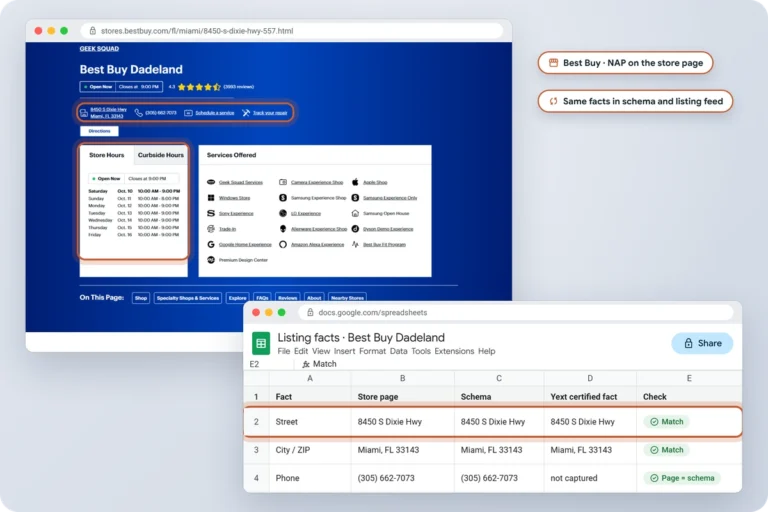
    Names, addresses, phone numbers, categories, hours, and destination URLs should agree across priority profiles, location pages, directories, and structured data. Closed locations, outdated records, and material duplicates need deliberate resolution so customers and search systems receive the same facts.
    Step 3 · Improve

    Location Page Relevance and Geographic Connections

    Each location page should establish the market served, available services, operating details, and evidence that makes the business relevant to that area. Internal links, breadcrumbs, structured data, reviews, and nearby-location relationships should reinforce the same geographic context.
    Step 4 · Validate

    Visibility Engagement and Business Results

    Performance should connect profile actions and organic landing-page behavior with calls, directions, qualified leads, bookings, and revenue. Location-level trends, seasonality, and tracking gaps provide more useful evidence than a single map-grid screenshot.
    Engagement options

    Geographic Internal Linking Keeps Location Pages Relevant to Nearby Searches

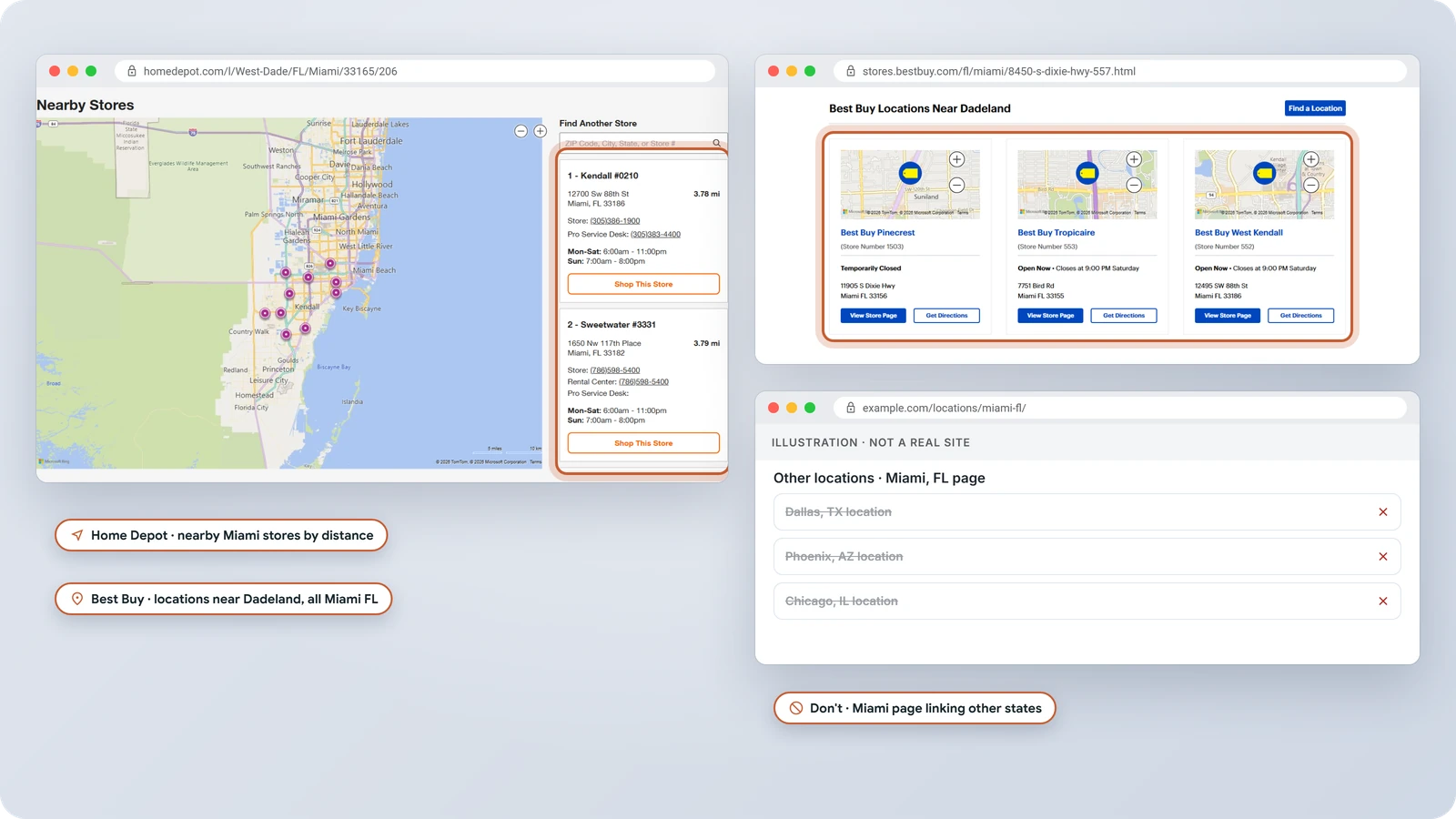
    A location page should guide customers and search crawlers toward places and services that are geographically useful. For a search such as “businesses in Miami, Florida,” the strongest contextual links usually connect the Miami page to individual Miami locations, nearby service areas, relevant Florida hubs, and services available in that market. Links to unrelated cities in distant states are not an automatic ranking penalty, but they do little to support the user’s local task and can make the geographic hierarchy harder to interpret when they replace more relevant paths.
    Home Depot and Best Buy Miami store pages linking only to nearby Miami stores, beside an illustration of a Miami page wrongly linking to locations in other states

    State and City Hubs Establish Geographic Relationships

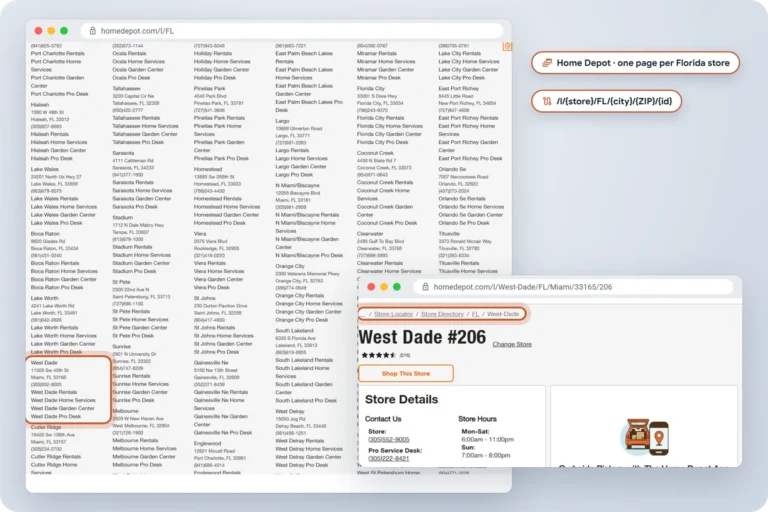
    A scalable location hierarchy can move from country to state, state to city or market, and city to individual store, office, or service-area pages. Breadcrumbs and crawlable internal links should reinforce those parent-child relationships. A Florida hub can link to its Florida markets; a Miami hub can link to verified Miami locations and relevant nearby communities; each location can link back to its city and state context.
    Most common

    Nearby Location Links Match Local Search Intent

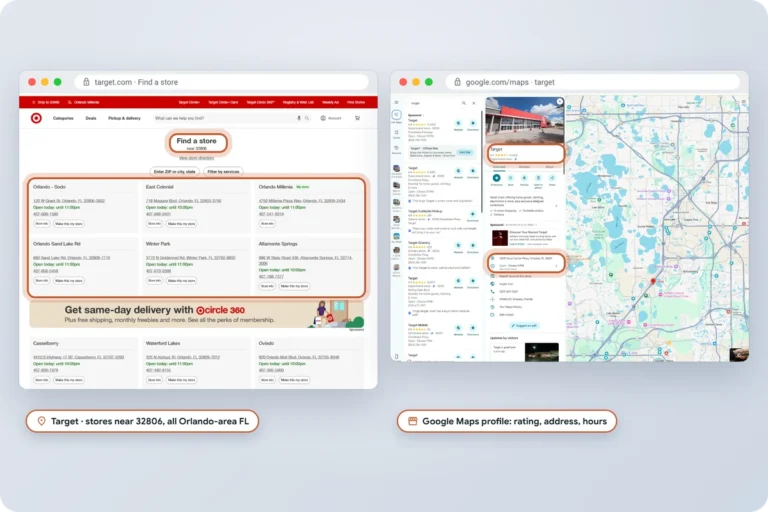
    Contextual links should help a customer complete a local task. A Miami page can surface nearby stores by distance, services offered, inventory or appointment availability, delivery coverage, or neighborhood. Best Buy, Target, and Home Depot use city or locator experiences that group relevant nearby stores and then connect users to individual location pages. WM uses city-level service pages to connect a market with the services offered there. The useful pattern is proximity plus operational relevance—not a generic list of every location in the company.

    National Navigation Should Not Replace Local Context

    Enterprise navigation may still provide access to a national store directory, corporate pages, and locations in other states. Those global links are not inherently harmful. The problem occurs when the body of a local page emphasizes unrelated markets instead of its own city, nearby locations, and locally available services. Templates should separate global navigation from contextual location modules, use descriptive anchor text, and generate nearby links from verified geographic and operational data.
    FAQ

    Local SEO Questions About Profiles Locations and Rankings

    A legitimate service-area business needs a real operating location for profile eligibility, but it should hide the address when customers are not served there. The service area should describe where the business actually travels to customers. The website can explain coverage without presenting unsupported offices or creating a profile for every city served.
    Each eligible location should have accurate ownership, its own profile when platform guidelines permit it, and a dedicated website page with distinct operational information. Profile URLs, internal links, structured data, navigation, canonicals, and sitemaps should consistently identify the correct location. Shared brand content is expected, but the location evidence should not be a city-name swap.
    Map rankings are useful when tracked across representative locations and queries, but they are not a complete business outcome. Measurement should connect profile searches, views, calls, directions, website clicks, landing-page sessions, conversions, qualified leads, appointments, revenue, and lead quality. Changes should be compared by location and time while accounting for seasonality, platform updates, and tracking gaps.

    Related SEO Capabilities for Local Visibility

    Scroll to Top