Enterprise paid search strategy and account oversight

Enterprise Google Ads Management Built Around Revenue

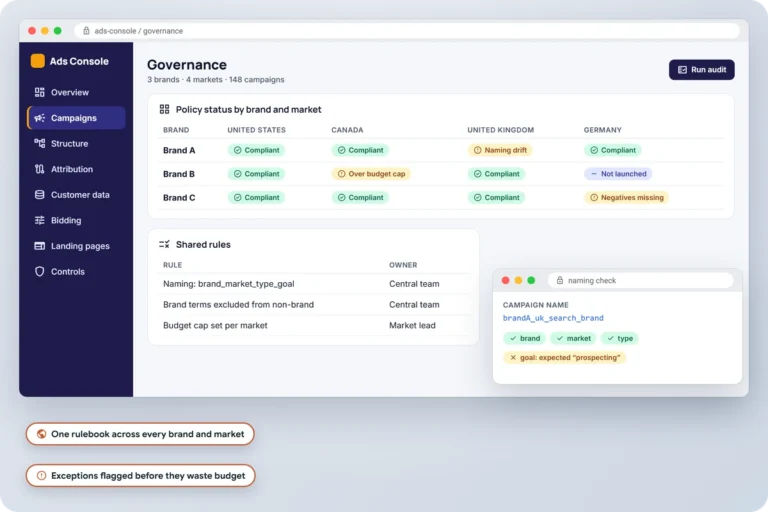
Complex accounts require more than campaign optimization. Effective management connects budgets, customer demand, conversion data, and business goals so leadership can see what is driving growth and where advertising spend is being wasted.
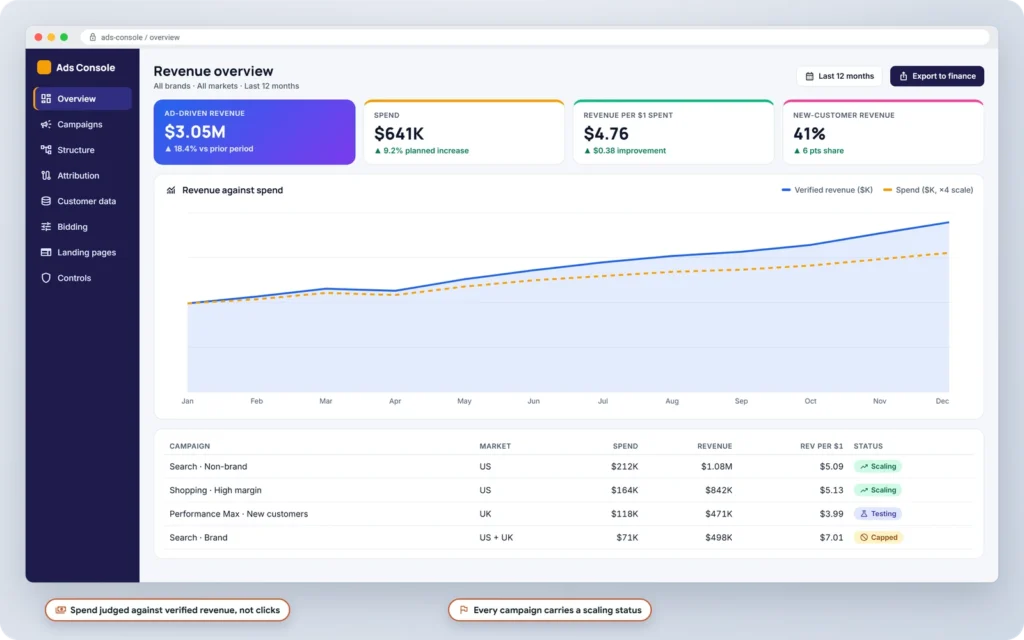
Google Ads revenue dashboard comparing verified revenue with spend, with revenue per dollar, new-customer share and a scaling status for each campaign
On this page
    Add a header to begin generating the table of contents
    Scroll to Top

    Paid Search Should Produce Measurable Business Growth

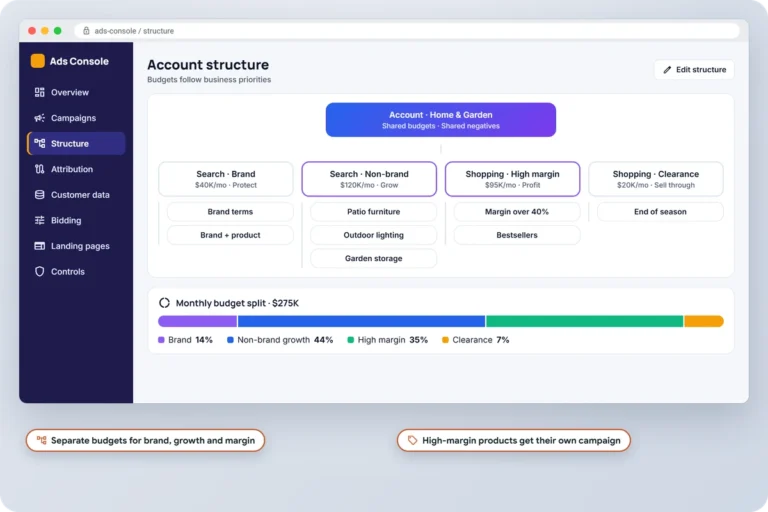
    Large accounts often span multiple brands, markets, products, and teams. Without clear ownership, campaigns compete for the same demand, budgets become difficult to evaluate, and platform reporting can overstate performance.

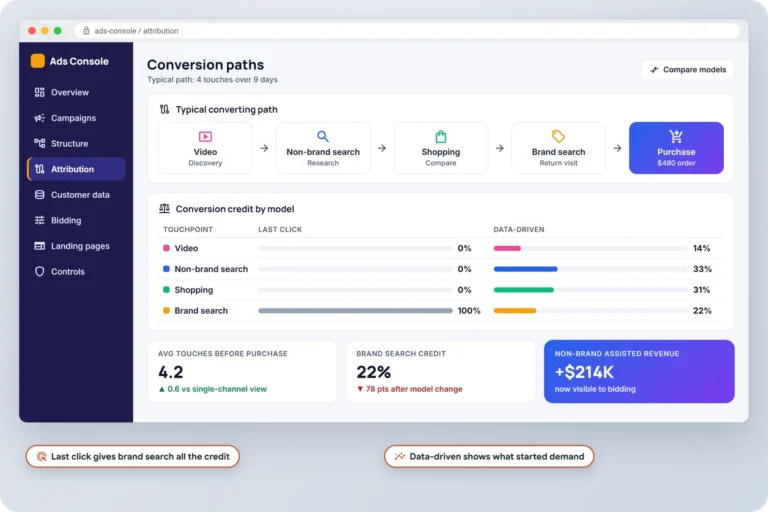
    Effective management connects account structure, first-party data, and financial targets. This shows which campaigns acquire new customers, which capture existing demand, and where additional investment can produce profitable growth.

    What's included

    Account Management Must Control More Than Campaign Settings

    Enterprise performance depends on how campaigns are organized, measured, funded, and reviewed. These areas determine whether leadership can trust the results and increase investment with confidence.
    How it works

    Budget Scaling Requires Proof of Incremental Growth

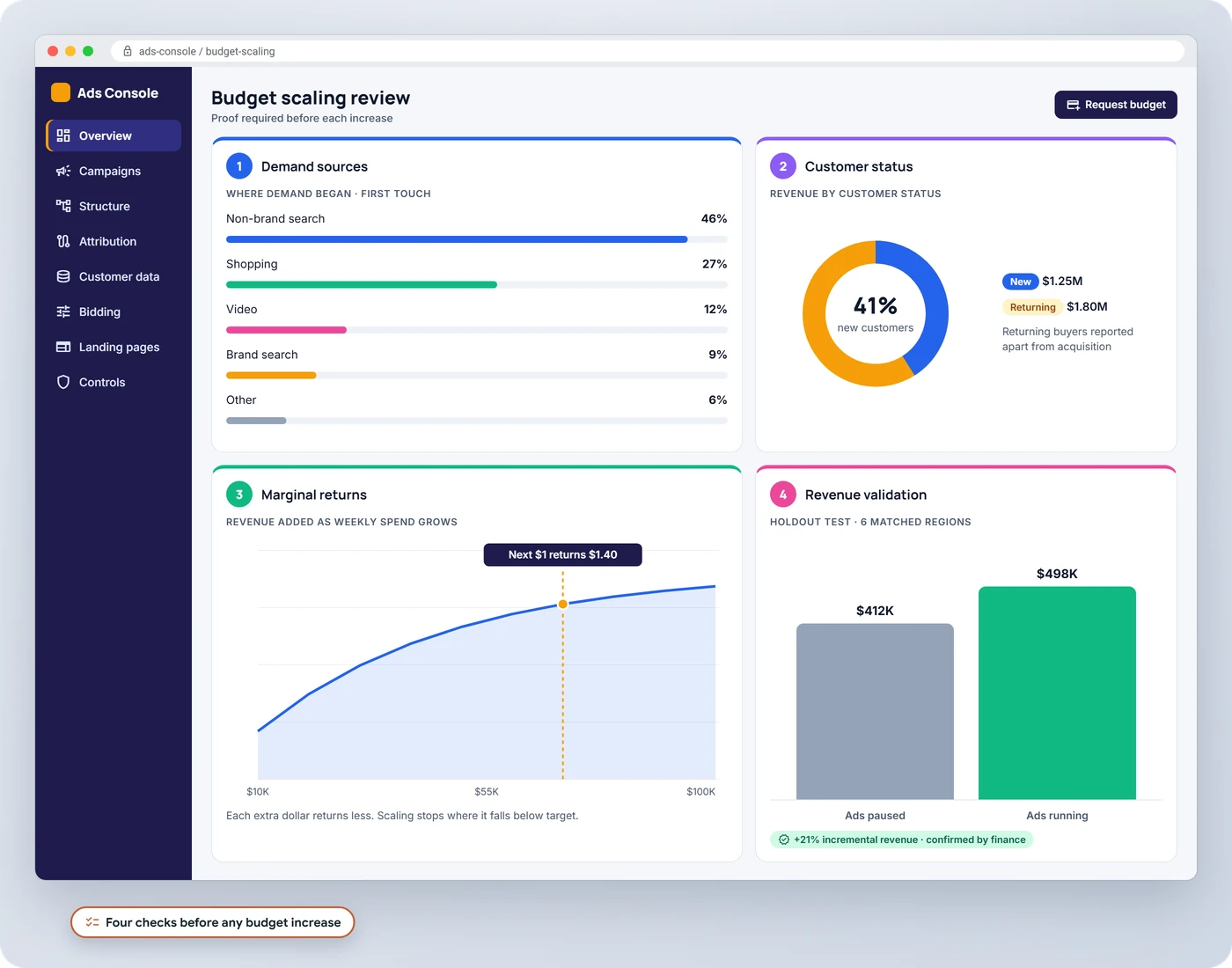
    Budget scaling review in four steps: demand sources, new versus returning customer revenue, marginal returns curve and a holdout test
    Step 1 · DEMAND SOURCE

    Demand Sources Reveal Where Interest Began

    Compare paid search with organic search, social media, email, referrals, and offline campaigns. This separates channels that created demand from the channel that received the conversion.
    Step 2 · CUSTOMER STATUS

    Customer Status Separates Acquisition From Retention

    Separate new customers from returning buyers, branded searchers, previous visitors, and existing leads. Compare platform classifications with first-party records whenever possible.
    Step 3 · MARGINAL ECONOMICS

    Marginal Returns Show When Growth Becomes Expensive

    Track how acquisition cost, customer quality, and profit change as budgets increase. More conversions do not create better growth when each additional customer costs too much to acquire.
    Step 4 · BUSINESS OUTCOME

    Revenue Validation Confirms Business Impact

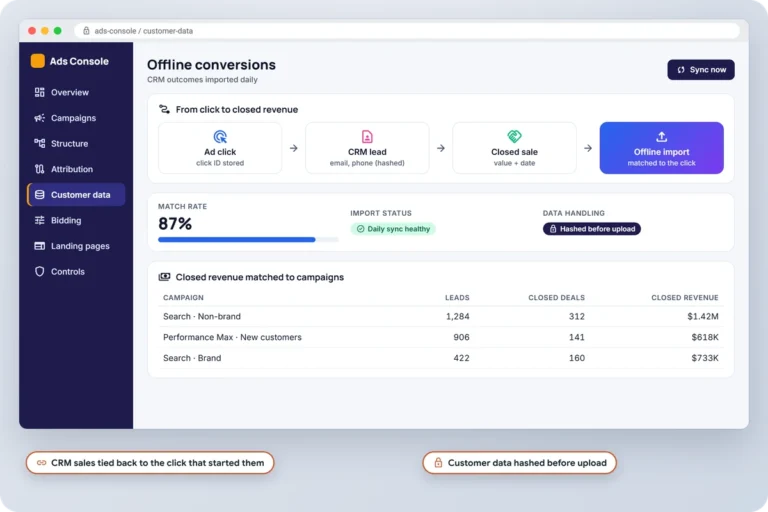
    Compare reported conversions with qualified leads, sales, revenue, profit, returns, and cancellations. The final measure is whether the investment improved the business, not whether the platform reported more activity.
    Engagement options

    Automation Requires Control, Not Blind Trust

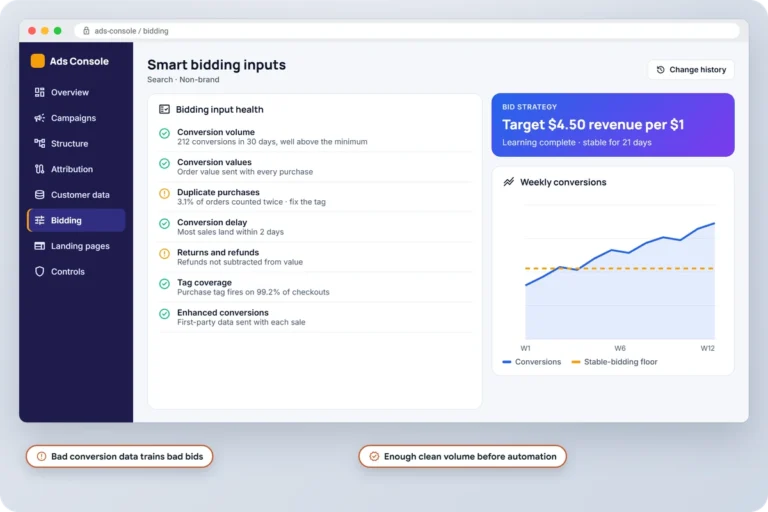
    Automation can support defined business goals, but it is not the right answer for every campaign. Its value depends on reliable data, clear financial targets, and ongoing oversight.
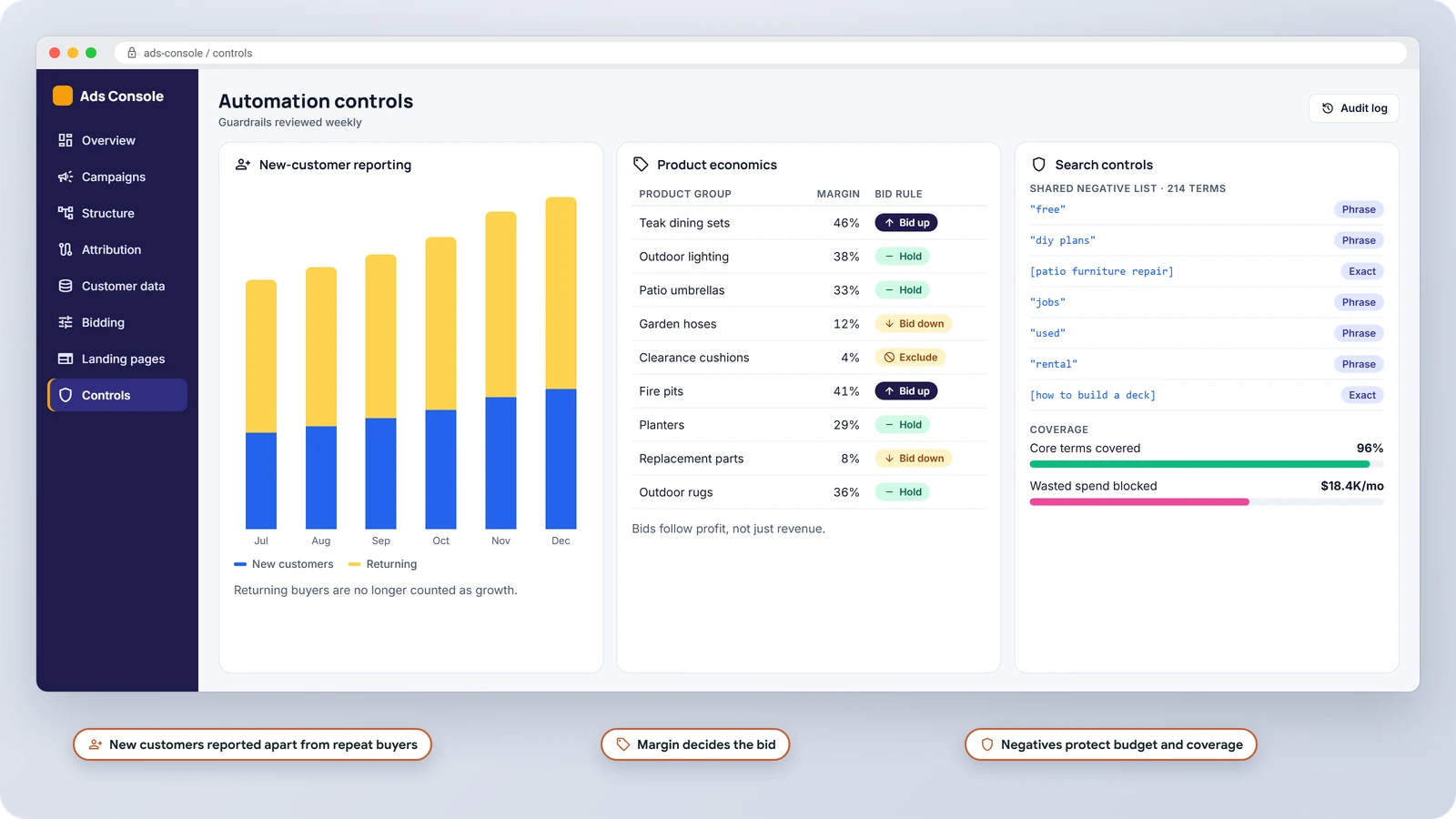
    Automation controls showing new-customer revenue reporting, product margins driving bid rules, and a shared negative keyword list

    New-Customer Reporting Prevents Inflated Performance

    Branded searches, returning customers, and remarketing activity can make acquisition performance appear stronger than it is. Separate reporting shows whether advertising is reaching new customers or collecting demand that already existed.
    Most common

    Product Economics Shape Commerce Decisions

    Pricing, availability, shipping, margin, returns, and repeat purchases determine the real value of product advertising. Revenue alone can make high-volume products appear more profitable than they are.

    Search Controls Protect Budget and Coverage

    Negative keywords, brand exclusions, location settings, and landing-page controls can reduce unwanted reach. Each restriction needs a clear purpose because broad controls can also block valuable demand.
    FAQ

    Google Ads Management Questions About Structure, Tracking, and Optimization

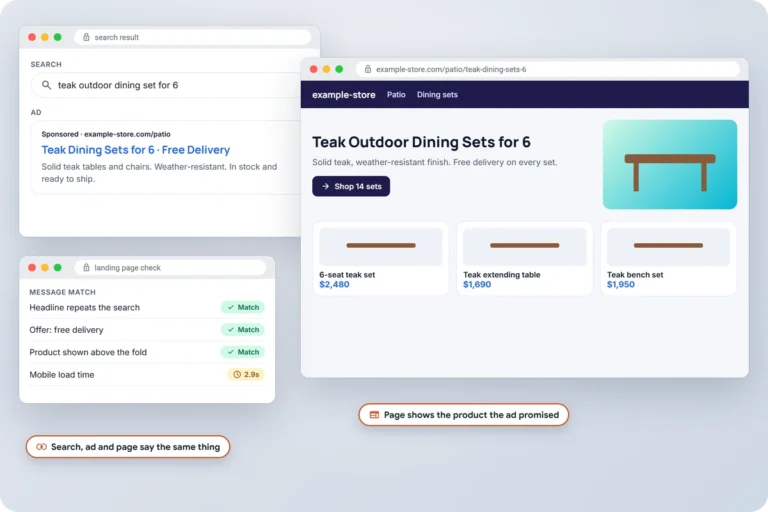
    Use separate campaigns when products, services, or locations require different budgets, goals, or targeting settings. Within each campaign, group closely related searches and ads around a focused theme, then send visitors to a matching landing page. The structure should follow the needs of the business rather than a fixed template.
    Track the actions that represent business value, such as purchases, qualified leads, calls, or bookings. Add revenue or lead-quality data when it is available, and confirm that each conversion is recorded correctly before raising the budget. Incomplete tracking can direct spend toward activity that does not produce customers.
    Review campaigns regularly and after material changes, but do not make adjustments simply to follow a daily schedule. The appropriate frequency depends on spend, conversion volume, sales cycles, and business risk. Reviews should cover search terms, budgets, conversion quality, ads, locations, and landing pages while allowing enough data to judge major changes.

    Related Capabilities for Measurement, Search, and Commerce

    Scroll to Top