01
Keyword-to-Page Mapping for Categories and Products
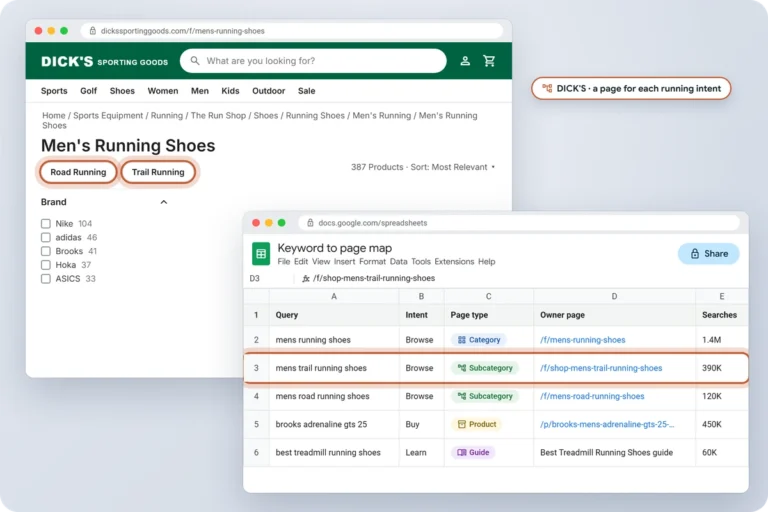
I map how people describe products, compare options and narrow their choices, then assign each search to one page. Search volume matters, but so do intent, assortment depth, competition and what already ranks. A category page, a product page, a comparison and a buying guide should each own a different job.
02
Site Architecture That Keeps the Catalog Crawlable
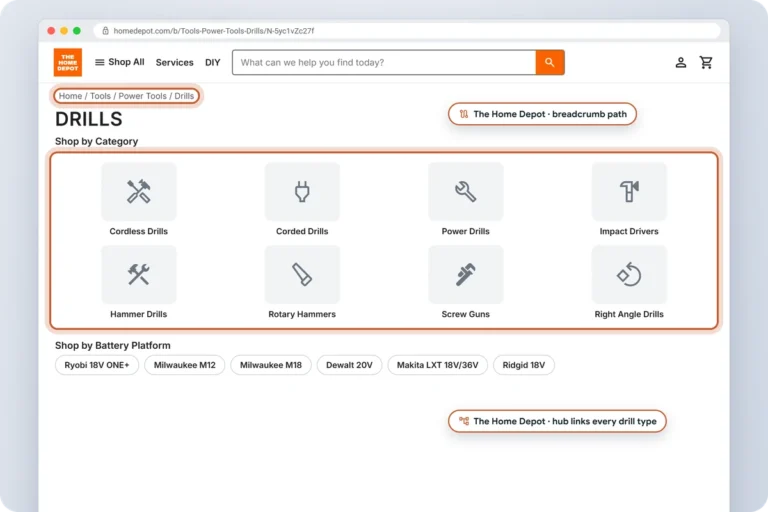
I build a clear path from departments to categories, subcategories, products and buying guides. Priority products should never depend on the internal search box, an unrendered script or a temporary promotion to be found. Crawlable links, sound pagination and stable navigation expose the full catalog.
03
Category Pages That Win Broad Commercial Searches
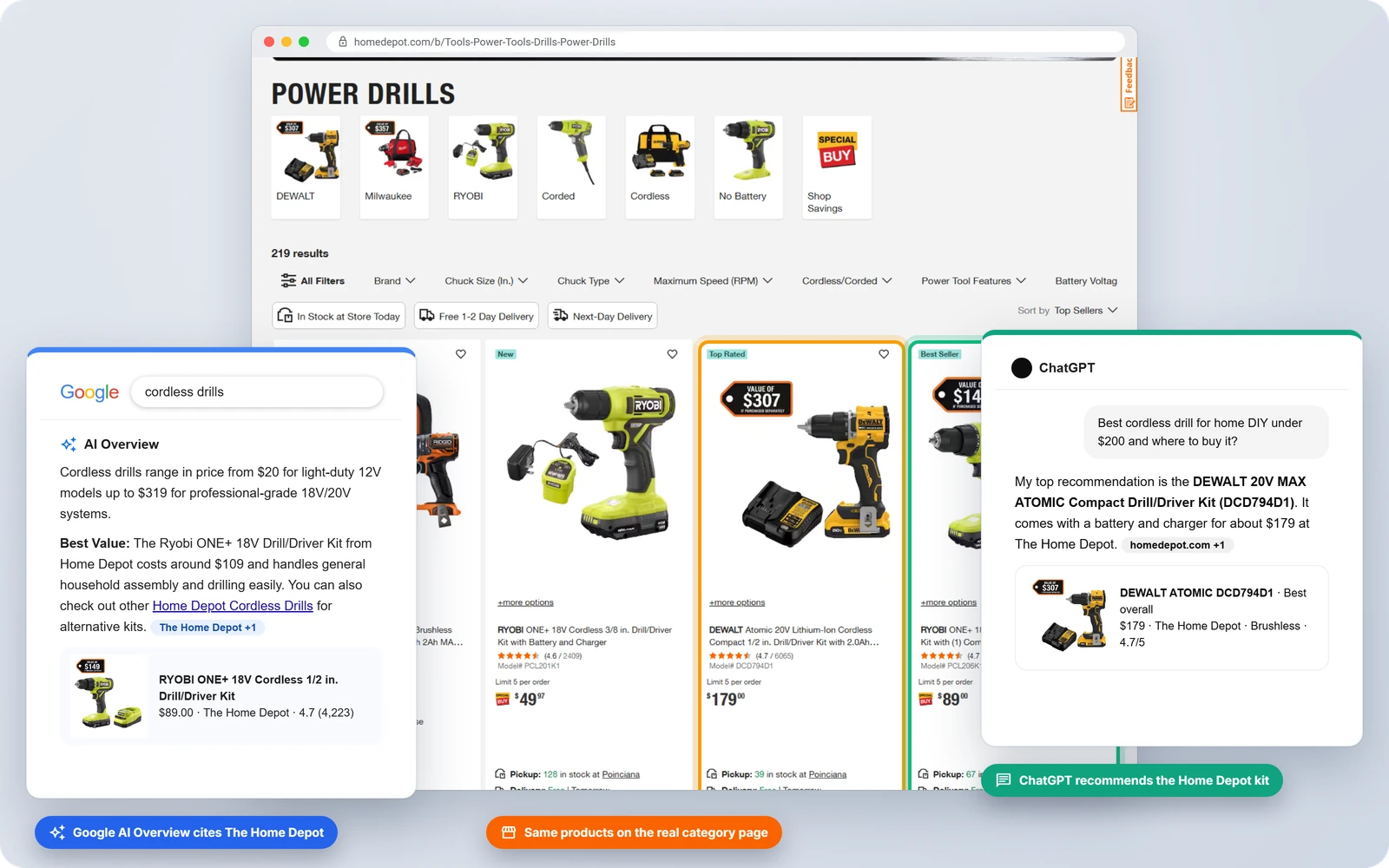
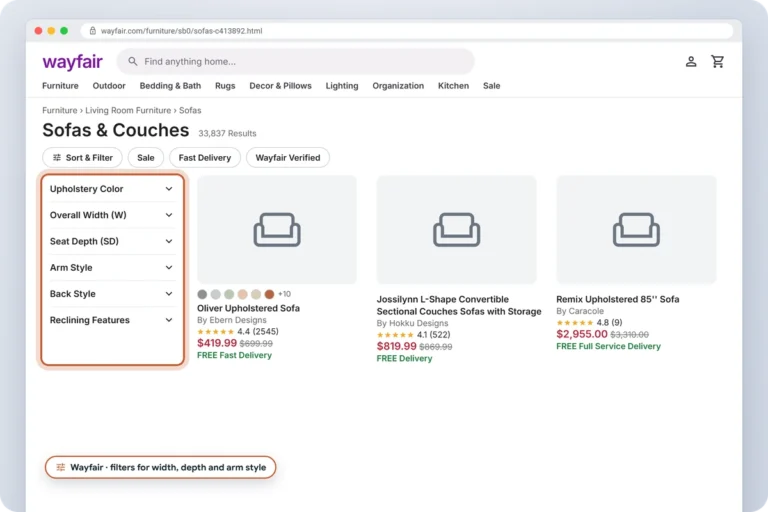
Category pages win the broad commercial searches. I make sure each one names the product type, shows a relevant and stable selection, offers useful filters and explains how to choose. Instead of overlapping collections and filtered URLs splitting demand, one page owns each category search.
04
Faceted Navigation Rules for Filter and Parameter URLs
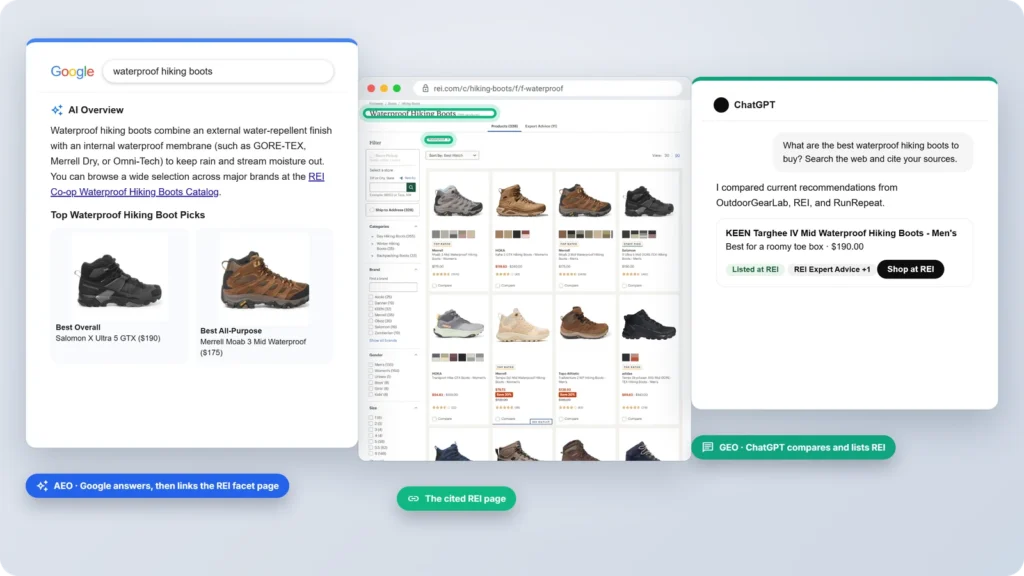
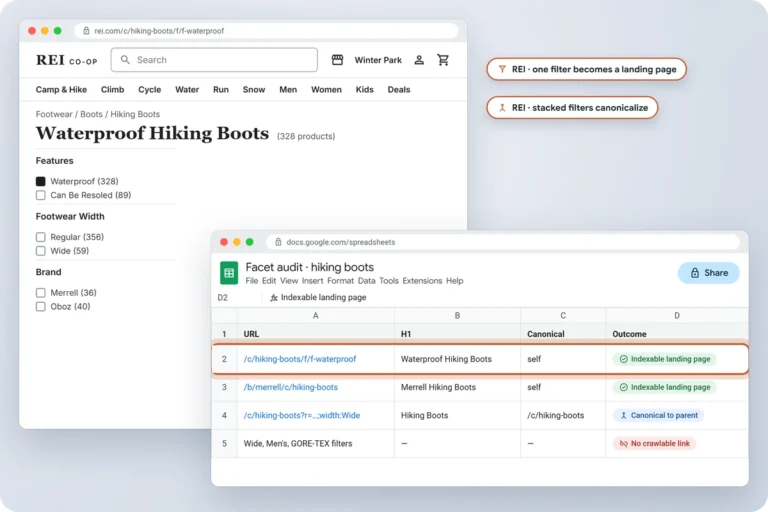
Filters can create useful landing pages — or duplicate URLs and an endless crawl space. I set an explicit rule for every facet pattern: crawling, indexing, canonical tags, internal links, XML sitemaps and empty results. Only combinations with real, lasting search demand become indexable pages.
05
Variant and Canonical Strategy for Product Pages
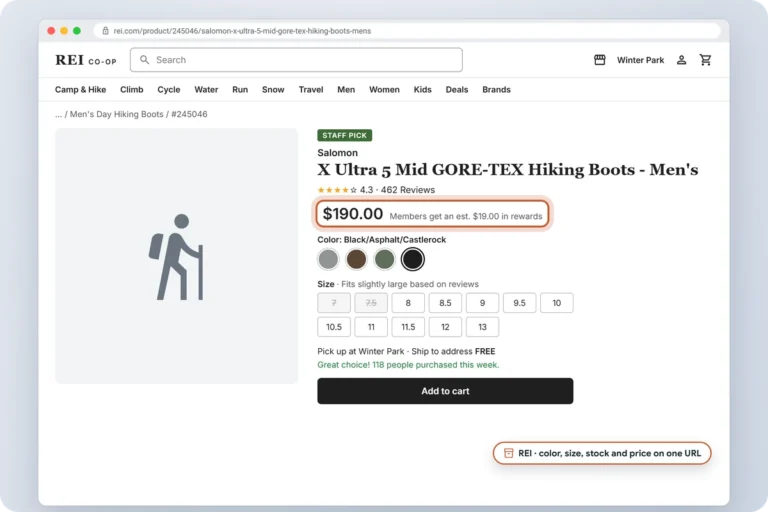
Product pages have to answer purchase questions: dimensions, materials, compatibility, care, price, availability, shipping, returns and reviews. I also decide how variants are handled, as separate URLs or one canonical page, based on search demand, platform behavior, inventory and feed requirements.
06
Product Schema and Merchant Feed Consistency
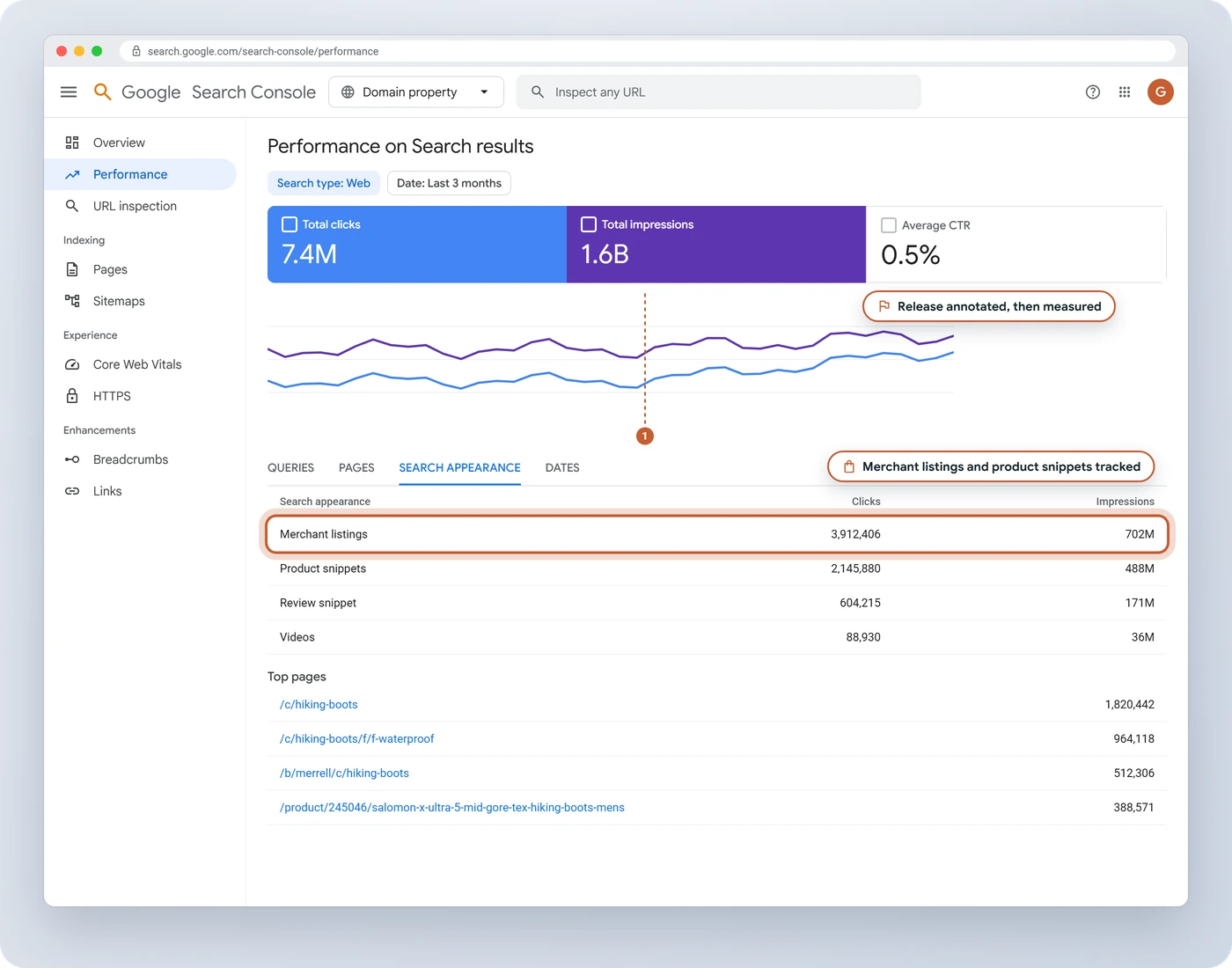
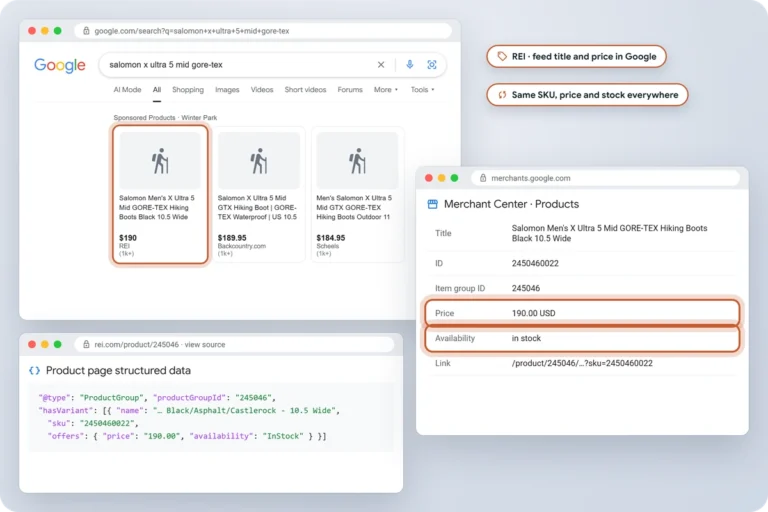
The visible page, Product structured data, the canonical URL and the merchant feed should all describe the same item. Conflicting prices, availability, identifiers or return details cause display problems in search and shopping results. I audit all four together. Structured data supports eligibility; it doesn't guarantee a rich result, ranking or citation.